

We all save money for things like children’s education, buying a house, retirement, or some other things. Keeping all that money only in a savings account (FDs and RDs) often feels safe, but it usually grows very slowly. This is where mutual funds come into the picture. They offer a way for ordinary people to invest in markets without needing deep financial knowledge or daily tracking .
If you are new to investing, you may have heard people say things like:
“Invest in mutual funds, they’re safer,” or “Mutual funds are good for beginners.”
But what exactly are mutual funds?
And why are they often recommended for people just starting out?
In this article, we’ll explain what mutual funds are, are safe they are, how they work, and why they are suitable for beginners—in simple words.
What Are Mutual Funds?
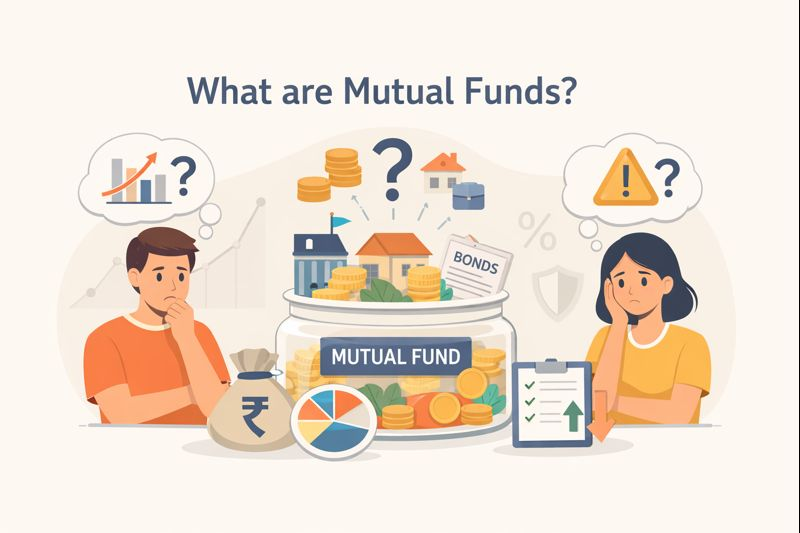
A mutual fund is a place where many people put their money together. This collected money is then invested in things like shares of companies, bonds, or other assets by the funds managers.
These funds manages are well qualified to invest your money in share market.
Which companies fund managers invest our money?
- Multiple companies
- Different sectors
- Various types of investments
Instead of investing your money in just one company or one asset, they spreads your money. This spreading is called diversification.
Each investor owns a small portion of the entire fund.
How Mutual Funds Work (Simple Explanation)Here’s how a mutual fund works step by step:
- Many investors invest money into the mutual fund
- All the money is collected into one pool
- A professional fund manager invests this money
- The fund invests in stocks, bonds, or other assets
- Any gains or losses are shared among investors
As an investor, you don’t need to:
- Pick individual stocks
- Track markets daily
- Make frequent decisions
The fund manager does that on your behalf. and you pay a certain fee to them which we call it as expense ratio.
Why Mutual Funds Are Popular with Beginners
Mutual funds are beginner-friendly because they offer:
1️⃣ Diversification
Your money is spread across many investments, reducing risk. stocks, bonds, real estate, gold etc.
2️⃣ Professional Management
Experts manage the fund using research and experience.
3️⃣ Easy to Start
You can start with small amounts, even minimum monthly investments like ₹500 per month and even some funds also allow ₹100 per month.
4️⃣ Less Stress
No need to constantly monitor individual stocks. You can think that you have hired a professional for doing that who are fund manages.
This makes mutual funds a good entry point into investing.
Types of Mutual Funds (Basic Overview)
You don’t need to remember all types, but understanding the basics helps.
Equity Mutual Funds
- Invest mainly in stocks
- Higher growth potential
- Suitable for long-term goals
Debt Mutual Funds
- Invest in bonds and fixed-income assets
- Lower risk compared to equity
- More stable but lower returns
Hybrid Mutual Funds
- Mix of equity and debt
- Balance between risk and return
Beginners usually start with diversified equity mutual funds for long-term goals.
Mutual Funds vs Direct Stock Investing
Here’s a simple comparison:
Direct Stock Investing
- You choose individual companies on your own
- Requires research and time
- Higher risk if not diversified well
Mutual Funds
- Professionals choose investments (Fund managers)
- Built-in diversification
- Lower effort for beginners
Mutual funds are often a safer starting point for new investors.
How Do You Make Money from Mutual Funds?
You can earn returns from mutual funds in two main ways:
1️⃣ Increase in NAV (Net Asset Value)
If the value of the fund’s investments increases, your investment value rises. You can think like – you buy a mutual fund at the NAV of ₹10 after sometime NAV goes to ₹15 so the difference of ₹5 is your profit (Before tax)
2️⃣ Dividends (in some funds)
Some funds distribute profits to investors, though growth options reinvest profits.
For long-term goals, growth options are usually preferred.
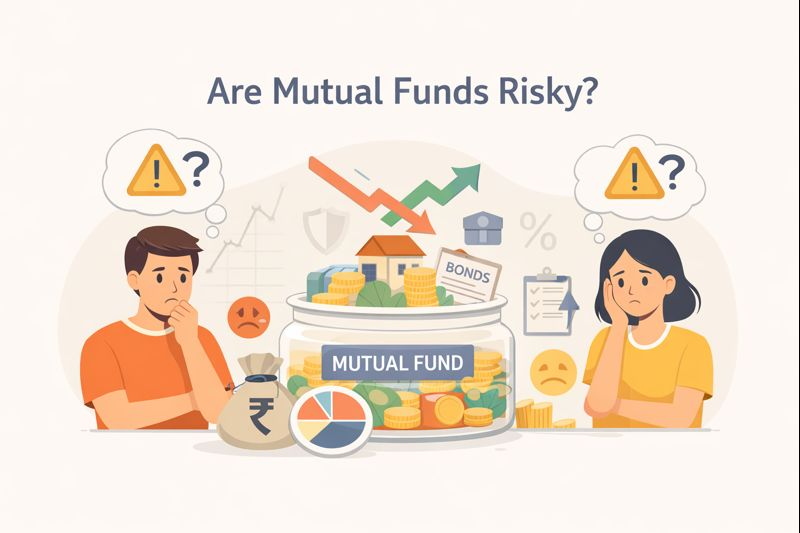
Are Mutual Funds Risk-Free?
No investment is completely risk-free. There are always some risk involved.
Mutual fund risk depends on:
- Type of fund
- Market conditions
- Investment time horizon
However, risk is reduced through:
- Diversification
- Long-term investing
- Professional management
This is why mutual funds are considered lower risk than picking individual stocks, but not risk-free. Before making investment you need to determine the fund you are investing better suits your investment objective and risk taking capacity.
A specific mutual can be good for you but may not fit for someone else. Before investing carefully evaluate few main things.
- Your Investment objective
- Risk taking capacity
- Time horizon (For how long you want your money to be invested)
Who should NOT invest in mutual funds?
- Investors with very short-term goals
- People unwilling to pay fees
- Risk-averse individuals
- People who are seeking quick profits
These people should not invest in mutual funds, because mutual funds may not be best suited for their investment goals.
How Much Money Do You Need to Start?
One big myth is that you need a lot of money.
In reality:
- You can start with small monthly amounts
- Even ₹500 per month is enough to begin (Even ₹100 in few mutual funds)
Regular investing matters more than the starting amount. This regular monthly investment is called SIP.
Mutual Funds and Long-Term Wealth
Mutual funds work best when:
- You invest regularly
- You stay invested for years
- You ignore short-term market noise
Over time, compounding helps your money grow steadily.
Mutual funds are not about quick gains. They are about consistent, disciplined growth.
👉 You can your our SIP calculator and Lumpsum Calculator for calculating the mutual funds returns
Common Myths About Mutual Funds
Myth 1: Mutual funds are completely safe
Truth: They involve risk, but risk is managed. No investment is completely safe and risk free.
Myth 2: Mutual funds give guaranteed returns
Truth: Returns depend on market performance. There is no guarantee of returns.
Myth 3: Mutual funds are complicated
Truth: They are way simpler than direct stock investing.
Final Thoughts
Mutual funds are one of the easiest ways for beginners to start investing.
They offer:
- Simplicity
- Diversification
- Professional management
You don’t need to be an expert. You just need to start with the right mindset and time horizon. Mutual funds are not risk for everyone and not safe either. It totally depends on your investment goal and risk capacity.
Read our article on saving vs investing to understand the key differences and decide which approach best suits your needs.
What to Read Next
🔑 Key Takeaway
Mutual funds let beginners invest with diversification and professional management.
They reduce effort and risk compared to picking stocks.
Time and discipline are the real drivers of returns.
